



 Athens’s triera Athens’s triera(Greek’s war ship) |
 "Liburska liburna" "Liburska liburna"(Illyrians war ship) |
 Part of queen Teuta place Part of queen Teuta placein Sucuraj |
 Amphorae from sunken roman Amphorae from sunken romangalleys - founded near Sućuraj |
 Anchor from sunken roman Anchor from sunken romangalleys - founded near Sućuraj |
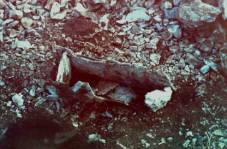 Illyrian grave ("zgrčavac") Illyrian grave ("zgrčavac")near Sućuraj |
 Graves in the shape of small Graves in the shape of small houses - a remnant of old roman customs |
 In Oglavak and Koscak (near Sucuraj) by the tradition was the position of the Illyrian queen Teuta place (who lived here). Sucuraj lies on the foundations of the town she was building. It was not finished it because she lost the war with the Romans.
To confirm these legends there are no written documents because the Illyrians were illiterate. The historical facts are: in the middle 4th century BC the Illyrians tribe Ardians came to the sea and settled around the river Neretva and toady's Makarska Riviera; the Ardians where famous warriors, and after arriving to the coast they learnt the seaman ways and became pirates who first attacked Greeks and after Romans ships; for pirate-activity Sucuraj was ideal, because of it's deep bay where war-ships are invisible and the hill above Sucuraj was a excellent look-out for all ship traffic in this region; from Sucuraj they could quickly attack and conquer ships in the area. Besides the bay was a big fertile field, and it is known that Ardians had 300 000 serfs who worked in there fields while they were at war or having fiestas with lots of beer, wine and drink sweetened with honey.
In the middle 3rd century BC the Ardians king Argon united several Illyrians tribes and extended his country from Biograd (near town Zadar) to the river Drim (in today's Albania). King Argon died in 231 BC of enjoying too much alcohol. The authority over he kingdom inherited his wife Teuta because their son Pinnes was under-age. Teuta ruled until 219 BC, she was glorified by heir warlord Demetrius of Pharos (today town Stari Grad on the island Hvar). Teuta was in war with the Romans because of the pirate attacks. After the first successes she lost the war when Demetrius turned sides to the Romans. Teuta took refuge to the fortress Risan in Boka Kotorska (today in Montenegro). The big Illyrians country was reduced to the territory between Boka Kotorska and the river Drim.
So, if the legend of Queen Teuta it true, Sucuraj is one of the oldest towns in Europe. Contribution to this legend is many sunken Roman galleys around Sucuraj.
Soon after Demetrius of Pharos went into battle with the Romans who destroyed Pharos in 219 BC. By the legend the Illyrians soldiers fled over the island to the east and come to Sucuraj. With no were to go they occupied Teuta's fortress. Illyrians objects confirm that they fortify the harbour of Sucuraj and protected the village, which means that the Illyrians lived in Sucuraj after 219 BC.
The remains of the queen Teuta palace and the fortress of Demetrius of Pharos are still visible. Also, many Illyrians graves with bones, ceramic and seashells are found. There are many Illyrians stone-piles; the most famous is ''Velika Gomila'' (old Illyrians grave-yard). Around Sucuraj there are many more localities from the Illyrians time that testifying the presence of Illyrians before 2300 years.
The Romans conquerd island Hvar after the battle with the Illyrians 219 before Christ. In Sucuraj there are ruins of two Roman towns, proclaimed to the world 1525 by eridute Dominican Vinko Probojevic in his famous speech ''About origin and occasions of the Slavens''.
These towns were ruined in the Turk wars. The first Roman town in Sucuraj was located in today's Gornja Banda; the second was near Mlaska bay. The middle of the first town must have been in place of today's monastery, because of a white mosaic found there; most of it is preserved in the parish treasury. It came from a rich Romans place. At the location of the second town many remains can be seen, Roman walls, manors and country-houses a very well preserved well ("gustrina") and many other remains. In many locations in the sea around Sucuraj, remains of many Roman galleys and lots of Amfor's (jars for wine, oil, honey, etc.).
History of Sućuraj:
1. Antique Sućuraj (Illyrians and Romans)
2. Sućuraj in the Middle Ages (arrival of Croatians)
3. Sućuraj during Venetians (fighting the Ottomans)
4. Sućuraj in the 19th century (Austria, France and the Austria-Hungary kingdom)
5. Sućuraj in the 20th century (3 wars, 6 states)
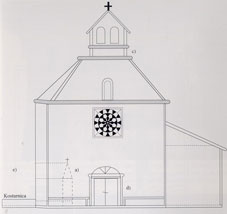 Old church of st. George Old church of st. George |
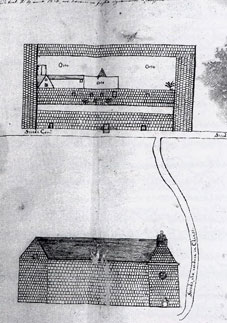 Old parish church and monastery Old parish church and monastery(13rd century) |
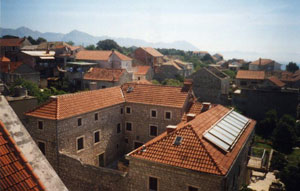 The Franciscan monastery The Franciscan monastery(9th century) |
 In the 7th and 8th century came the Croats and colonized Neretva valley, coast, peninsula Peljesac of course island of Hvar. In this colonization Sucuraj was an eminent location, because of its position. It's hard to imagine colonization of the middle dalmation islands without occupying the east cape of the island Hvar – Sucuraj.
Sucuraj harbour was a first a very convenient location for the pirates from Neretva. There are archaeological findings that the population for security from pirate attacks made a town further away from the harbour in the fields surrounding Sucuraj.
The Neretva-pirates were baptized after the year 870. In the court yard of the church of St. George are remains of the base of a 9th century chapel. On these bases in the 13th century Augustine fathers built a church dedicated to St. George, it is mentioned in the Hvar statute from 1331. The church was destroyed in the 19th century, after witch a new church was built. Sucuraj got its name form that church (Sucuraj = St. Georges city). The Augustine's made the monastery in Sucuraj; it has been ruined and restored many times. This monastery still exists today. On the doorway there is an in scription: COENOBIVM ORDINIC FRATRVM EREMI. TARVM S. AVGVSTINI. MCCCIX RASTAVRATVM (Monastery of the hermit brothers of St. Augustine, restored 1309). The monastery vas restored in 1309 because it was burnt-dovn in 1280 by Omis pirates.
Mediaeval Sucuraj was consisted of more than one settlement. The first was near Mlaska bay, devasted by the Turks in 1526. Most of mediaeval population of Sucuraj lived in old Sucuraj near the fields, the remains can still be seen. The third settlement was in nowadays Gornja Banda.
History of Sućuraj:
1. Antique Sućuraj (Illyrians and Romans)
2. Sućuraj in the Middle Ages (arrival of Croatians)
3. Sućuraj during Venetians (fighting the Ottomans)
4. Sućuraj in the 19th century (Austria, France and the Austria-Hungary kingdom)
5. Sućuraj in the 20th century (3 wars, 6 states)
 Fort Fortica from 1613 Fort Fortica from 1613 |
 Drawing of the Sućuraj from 1613 Drawing of the Sućuraj from 1613 |
 Drawing of the Sucuraj harbour and fortress from 1635 Drawing of the Sucuraj harbour and fortress from 1635 |
 Monumental plate from 1655 Monumental plate from 1655 |
 Church of St. Anthony from 1663 Church of St. Anthony from 1663 |
 Remains of the Bishops palace from the 17th centur Remains of the Bishops palace from the 17th centur |
 Drawing of the Bishops palace Drawing of the Bishops palace |
 The Venetians dominated the island Hvar from 1420 to 1797. The second half of the 15th century is the most difficult part of the history of Sucuraj. After the full of Bosnia, Turks occupied from 1464 to 1482 the Neretva valley, Makarska coast and came to the doors of Sucuraj. Sucuraj became the eastern end of the Venice republic. On the coast where the Turks, peninsula Peljesac were under the Republic of Dubrovnik, so Sucuraj was between three countries.
Sucuraj was under blows from the Turks armed-ships from Neretva and the coast, while the other places on island Hvar where not attacked. In these hard times, Sucuraj was robbed and burnt three times. The first time was in 1526, evidence of that is in the oldest saved document in the monastery archive dated 26.04.1526. The citizens were killed, taken as slaves, while some escaped. From a developed port-town, Sucuraj became devastated. Everything started from nothing.
The renovation of the village started, some of the citizens came back, and new inhabitants arrived fledging from Turk attacks on the coast. The second time the Turks robbed and burnt Sucuraj in 1539, after the people from Sucuraj with Omis pirates and Senj ''uskoks'' started active piratical actions. Pirate actions became a constant way of opposing the Turks and the Dubrovnik Republic.
After 1539 the reconstruction of Sucuraj starts again, and admission of new settlers feeding from Turks. In April 1570 1000 "uskok" and "hajduk" fighters gathered in Sucuraj and with 50 various vessels and 1 Venice galiq left to attack the Turks in Neretva valley but they did not succesed. After this came the deadfull 1571 when the Turks attacked Korcula, Stari Grad, Vrbovska and Jelsa. On the day 07.10.1571. Took place the big sea-battle of Lepant in which the Christian flote defeated the Turks, this became a turning-point in the war and the end of Turk prevail on the Mediterranean Sea. Several fighters from Sucuraj took part in this battle.
At the same time Turks from Neretva attacked undefended Sucuraj, burnt down for the third time the monastery and village, killed or took as slaves the citizens who did not escape. After these three devastations and killings the old inhabitants of Sucuraj vanished. Sucuraj is in ruins, all the houses in Gornja Banda and the new ones in Donja Banda (peninsula Gubavac) whose colonization started in 16th century.
Sucuraj is rebuilding for the third time, new inhabitants are arriving from the coast, fleding from Turks. After this devastation the Venice administration ordered the building of a fortress (fortica) to protect the harbour and village. Fortica was built in 1613, and finish in 1635. It had 10 canons and a regular military crew (photo). Life in Sucuraj became safer. Donja Banda in now more occupied than before, and the houses in Gornja Banda are rebuilt.
The 17th century was gold age of Sucuraj history. In that time the village became an urban town with all necessary buildings and a big harbour. In this century Sucuraj had 4 churches and 3 monasteries. The population coming from areas under Turk occupation came with Francis priestess. As the coast was under Turks the bishop of Makarska fra Bartul Kacic Zarkovic took care of his flok from Sucuraj. He built a palace (Bishop's palace) ruined in the 2nd world war. Bishop fra Bartul died in 1645 and was buried in the old church St. Geroge. The death of the bishop the people of Sucuraj lost the popular spiritual and national leader, creator of modern Sucuraj. In the hall of the new St. George church is a monumental plate written in "bosanica" (old Croatian writing), which was put up in the honour of the bishop in 1655, by the duke Petar Kulusic – a Sucuraj-warrior, legendary leader of all pirate, hajduk and uskok units in Krajina and on Hvar.
The Francis priestess from Zaostrog built in 1663 the baroc church of St. Anthony, which still exists. In 28.04.1664. The Turks attacked Sucuraj and captured 12 men, but the people of Sucuraj made a counter-attack and liberated the captives and captured some Turk soldiers. After this the Turks never came to Sucuraj again and the economic evolution of Sucuraj began.
In the 18th century the glory and economic power of Venice falls so the market goes from the Mediterranean to the Atlantic and India, so it is an economic stagnation in Sucuraj.
History of Sućuraj:
1. Antique Sućuraj (Illyrians and Romans)
2. Sućuraj in the Middle Ages (arrival of Croatians)
3. Sućuraj during Venetians (fighting the Ottomans)
4. Sućuraj in the 19th century (Austria, France and the Austria-Hungary kingdom)
5. Sućuraj in the 20th century (3 wars, 6 states)
 Harbour bank (pumpurela) Harbour bank (pumpurela)from 1870 |
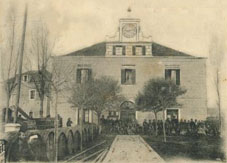 School and township from 1888 School and township from 1888 |
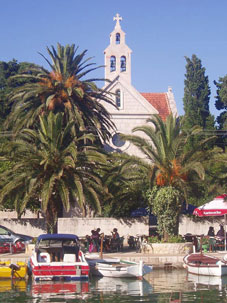 New church of St. George New church of St. Georgefrom 1897 |
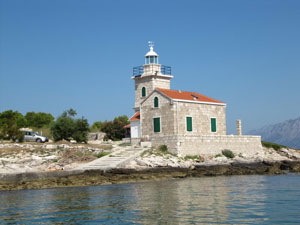 Lighthouse from 1898 Lighthouse from 1898 |
 Ater the peace settlement in Camofori in May 1797, the Venice part of Dalmatia and Boka Kotorska became Austrian. After 377 years of Venice administration, Sucuraj had a new ruler. Austria went to war with Napoleon in 1798 so her sovereignty was short. On the 26.12.1805 Dalmatia and whit it Sucuraj came under France.
In March 1806 the fortress in Sucuraj was taken over by a French military crew. Soon after there was a battle between the French and Russian war-ships in front of Sucuraj. The Russians in Autumn the same year robbed a big French wine-magazine in Sucuraj, they took 6150 litters of wine and 24 litres of vinegar! On the day 26.04.1807 Russian ships and Montenegro pirates again attacked Sucuraj but heroic resistance of armed Sucuraj people turned them back. The French general provincial as gratitude ordered the sale of wheat from the magazines to the people of Sucuraj with a big discount – at 10 times less price.
After these times there was a short peaceful time and economical development of Sucuraj. By decision of Napoleon on 25.04.1811 Sucuraj became a district. At this time started the building of the new graveyard (now called the old); a road to Hvar and public lighting was instalated. The old lighthouse was built and sacred to St. Anthony the monarch. After the defeat of Napoleon near Moscow the French lost authority over Sucuraj and Sucuraj went back under Austrian authority.
In 1817 the elementary school in Sucuraj was established. In 1867 came the Austrian-Hungary agreement and the Austria-Hungary monarchy was established. In the middle 19th century started the big economic develop of Sucuraj. The main economic branches were fishing, vineyards and olive-oil making. In Sucuraj there were 11 big nets for catching sardines, the vineyards gave 1500 tons of vine, the most famous called Prč (or Muscat) and vas used in the place of the emperor Francis-Joseph. The post office was built in 1868, the telegraph in 1871. In this time many public objects were built. First in 1870 the pier was built ("pumpurela") and part of the harbour bank. In 1888 the district building and elementary school was built, in 1889 the first public well with drinking water. In 1897 the new church of St. George, in 1898 the new lighthouse.
At the end of the 19th century came filocsery – a disease that in a few years destroyed the biggest part of the Sucuraj vineyards, the main economic branch in Sucuraj.
History of Sućuraj:
1. Antique Sućuraj (Illyrians and Romans)
2. Sućuraj in the Middle Ages (arrival of Croatians)
3. Sućuraj during Venetians (fighting the Ottomans)
4. Sućuraj in the 19th century (Austria, France and the Austria-Hungary kingdom)
5. Sućuraj in the 20th century (3 wars, 6 states)
 Sućuraj 1913 Sućuraj 1913 |
 Sućuraj 1922 Sućuraj 1922 |
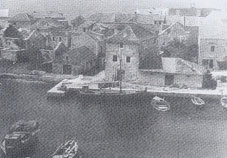 Sućuraj 1950 Sućuraj 1950 |
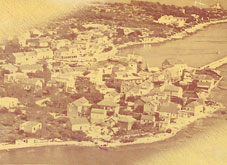 Sućuraj, the end of 60’s Sućuraj, the end of 60’s |
 Construction of a new ferry Construction of a new ferryport 1973/74 |
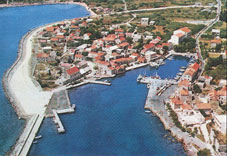 Sucuraj, middle 70’s Sucuraj, middle 70’s |

Sucuraj, the end of 20th century |
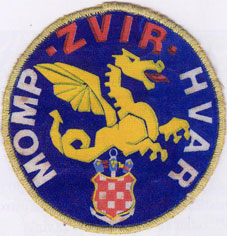 Emblem MOMP Zvir - Hvar, 1993 Emblem MOMP Zvir - Hvar, 1993 |
 The disease filocsery almost destroyed the strongest economic branch in Sucuraj – viniculture (the beginning of the 20th century) so emigration to overseas countries was vast. As if there was not enough trouble in 1914 the 1st world war started. Men from Sucuraj were mobilized and sent to various fronts, seven of them lost their lives.
The 1st world war finished in 1918 with the defeat of the Austria-Hungary empire, so Sucuraj comes under a new master – Italy. The people didn't accepted that willingly. By the Rapal agreement from 1920 it is decided that the Italians must leave most of Dalmatia, so Sucuraj comes under the Kingdom SHS (after Kingdom Yugoslavia) on the 21/04/1921. When Italians left Sucuraj there was a big celebrate (picture right). The new administration introduced new taxes, which increased the bad economic situation in Sucuraj. The vineyards were restoring (slowly), fishing was the main occupation. In 1938 a sardines factory was built, it is the first industrial object in Sucuraj.
However, peace didn't last long – the 2nd world war started. The Yugoslav Kingdom capitulated on the 17/04/1941. After the capitulation Sucuraj was officially included in the NDH ("Independent State of Croatia") but Sucuraj against the will of its population was occupied by an Italian garrison. Fishing was possible only with permission of the Italian administration, NDH documents were not legal. The men of Sucuraj didn't accept recruitment to the armed forces of NDH, so they hide in the woods, and after they went to the Partisan forces. On the 24/11/1942 the Italian forces briefly leave Sucuraj and it becomes a free partisan territory. In that time a fishing-boat called "Sloboda" (freedom) left Sucuraj harbour and became the 2nd Partisan war-ship on the Adriatic. On the 18/01/1943 the Italian soldiers return to Sucuraj in much bigger strength. Italy capitulated on the 08/09/1943 and the Italian garrison of 300 soldiers surrendered to the partisans of Sucuraj on the 12/09/1943.
The town is free for the 2nd time and becomes a free territory again. On the 21/09/1943 from Makarska comes NDH soldiers and after them the German forces. Sucuraj is in the middle of the war swirl. Around Sucuraj many sea, air and land battles were led. Sucuraj was almost totally destructed by air bombing (German and Allied). The population is evacuated to Slavonia and El Shat (in Egypt). The Germans left the town on the 21/09/1944. Partisans moved in to destroyed Sucuraj. At the beginning of 1945 the refugees from El Shat came back, and in summer the ones from Slavonia.
After the war the Yugoslav Federation was established with Croatia as a part of its. The total bilance of this war was catastrophic for Sucuraj: 40 people were killed, 18 died as refugees. Buildings were destroyed the 17th century bishop palace, the new district building and school, the Venice fortress was badly damaged. Sucuraj is one more in its history rebuilt from nothing. The life was varying hard after the war so the rebuilding is slow. You can sea trails of destroying on picture left from 1950. Fishing and agriculture are restored and in 1953 the sardine's factory starts to work again.
A bigger development starts in the 60-iec, in 1961 a road to Hvar is made, electricity came from the coast (from 1958 electricity was from the factory's power-plant). In 1963 started the ferryboat line Sucuraj – Drvenik (1st ferryboat has called "Tratica"), in 1969 a layer of asphalt was put on the road to Hvar. Very big changes start in Sucuraj at the end of the 60-ies and the beginning of the 70-ies – tourism starts: in 1970 the hotel called Perna was built, new houses are built, old ones are renovated and the town gets a new face. In 1974 the new ferryboat pier was built, in 1978 a car-camp was built in Mlaska bay. Drinking water from the mainland came in 1986, the living standard were much bigger.
When everything was going good, for the 3rd time in the 20th century it was stopped by another war. These time the Big-Serbia invasion of on Republic Croatia. At the referendum in May 1991 the people of Sucuraj voted (98%) for the independent state of Croatia, which after many centuries became an independent country. In August 1991 an army unit of ZNG was established in Sucuraj. Sucuraj in surrounded by Yugoslav navy ships, which in a few occasions put up a blockade of the town and forbid all traffic by sea. However the blockade didn't stop the organization of a fast-boat line to the coast – the only connection the island Hvar had with the rest of the world. On the 3/12/1991 the Yugoslav ships leave the Sucuraj aquatorid waters.
Learned from history the people started organizing the defence of the town, but thankfully in this war there were no big military battles near Sucuraj. Sucuraj organised the admission of a refugees from other parts of Croatia and Bosnia and Hercegovina. The army unit of ZNG was reorganized and most of the young men of Sucuraj became a part of a mixed unit of marines called Zvir – Hvar and in 1993 and '94 participate in military actions around Zadar (near Novigrad and on the mountain Velebit). From 1992 to 1994 the old Augustine monastery was completely renovated. So, the war finished, tourism starts again and it becomes the main economic branch in Sucuraj.
History of Sućuraj:
1. Antique Sućuraj (Illyrians and Romans)
2. Sućuraj in the Middle Ages (arrival of Croatians)
3. Sućuraj during Venetians (fighting the Ottomans)
4. Sućuraj in the 19th century (Austria, France and the Austria-Hungary kingdom)
5. Sućuraj in the 20th century (3 wars, 6 states)
The island of Hvar - the oldest page about the island of Hvar (unchanged since 1996) and the oldest text on internet about Sućuraj
The Thousand Islands of the Croatian Adriatic - very old page about the Croatian islands (unchanged since 1995)
Parks of Croatia - the web-page about national and nature parks in Croatia
Dinaric Alps - the web-page about the mountain chain
Island-Hvar.info - The island of Hvar site
Total Hvar - Blog about the island of Hvar
Dalmatia.hr - Tourist Board of the Split-Dalmatian County
• main local beach in the bay of the same name • south side • distance from the center: about 200 meters • pebble, stone and concrete shore • sandy and shallow sea bottom • showers and toilets • coffie-bar • protected by buoys • suitable for small children • access on foot, by car, scooter, bicycle and boat
Croatia, Island of Hvar, Sućuraj, Česminica beach - photos:


Beaches and bays in Sućuraj - Hvar Island, Croatia
Beaches and bays: Česminica beach, Bilina beach, Mlaska beach, Perna bay, Towards the Cape, Mačak cape and "under the road", Valica and Blace, Prapatna bay, Židigova bay, Mrtnovik bay, Brigove Bay, Didina bay, North side (the rest), South side (the rest)
• local beach • unspoiled nature • north side • distance from the center: about 500 meters • pebble and stone shore • pebble and stone sea bottom • flat rocks suitable for sunbathing • toilet • protected by buoys • therefore suitable for small children • access on foot, by car, scooter, bicycle and boat
Croatia, Island of Hvar, Sućuraj, Bilina beach - photos:


Beaches and bays in Sućuraj - Hvar Island - Croatia
Beaches and bays: Česminica beach, Bilina beach Mlaska beach, Perna bay, Towards the Cape, Mačak cape and "under the road", Valica and Blace, Prapatna bay, Židigova bay, Mrtnovik bay, Brigove Bay, Didina bay, North side (the rest), South side (the rest)
• almost unspoiled nature (one object on the shore) • north side • distance from the town: 3,5 km • pebble shore • sandy and pebble sea bottom • access by boat and on foot following the coast line from Mlaska bay (demanding path)
Photos of Brigove bay:


Everyone who finds themselves in Sućuraj on the island of Hvar and wants to spend the day swimming and sunbathing can choose one of the many sandy, pebble or rocky beaches and bays. Thanks to its position, the village has more than 20 km of a coastline on both sides of the island.
Beaches and bays in Sućuraj - Hvar island
Photo Gallery: Panorama, Beaches and bays, Other
Beaches and bays: Česminica beach, Bilina beach, Mlaska beach, Perna bay, Towards the Cape, Mačak cape and "under the road", Valica and Blace, Prapatna bay, Židigova bay, Mrtnovik bay, Brigove Bay, Didina bay, North side (the rest), South side (the rest)
• beach and car camp • Velika Mlaska – bathing costume part • Mala Mlaska – nudist part (FKK) • north side • distance from the town: 4 km (asphalt road) • sand, pebble and concrete shore • sandy and shallow sea bottom • showers and toilets • restaurant and shop • buoys for safety • suitable for small children • access on foot, by car, scooter, bicycle and boat
Croatia, Island of Hvar, Sućuraj, Mlaska beach - photos:


Beaches and bays in Sućuraj - Hvar Island, Croatia
Beaches and bays: Česminica beach, Bilina beach, Mlaska beach, Perna bay, Towards the Cape, Mačak cape and "under the road", Valica and Blace, Prapatna bay, Židigova bay, Mrtnovik bay, Brigove Bay, Didina bay, North side (the rest), South side (the rest)

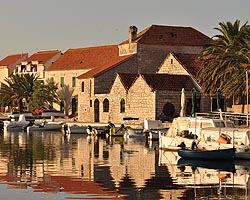
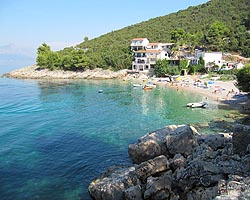
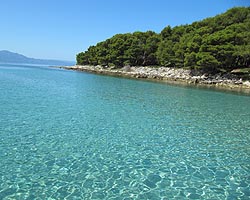


www.sucuraj.com
• Home
• Sućuraj info
• About Sućuraj
• News
• Sights
• History
• Climate,flora and fauna
• Entertainment and culture
• Sport and recreation
• Excursions
• Fishing
• Agriculture
• Gastronomy
• Beaches and bays
• Česminica beach
• Bilina beach
• Mlaska beach
• Perna bay
• More beaches and bays
• Accommodation
• Apartments
• Houses and villas
• Rooms
• Travel info
• How to reach us?
• Ferry timetable
• Maps
• Island of Hvar info
• Gallery
• Panorama
• Beaches
• Other
• Links
• About us
• FC Mladost
• Association Pelišnjak


Sucuraj homepage - island of Hvar, Croatia


About us - Contact
Site-map
Copyright © www.sucuraj.com
Since 2001
 English
  Slovenščina